Monica Kleintjes
Heart of the HunterMonica Kleintjes is Johnny Kleintjes’s daughter and a technology executive whose attempt to help her father becomes a pivotal link in the hard-disk delivery mission. She places her trust in Thobela Mpayipheli because her father identified him as someone he trusted completely; after the handover, she is caught between the people demanding the disk and intelligence officials trying to control the crisis. Her story is not simply one of being drawn into events by others: she makes a consequential choice, then faces the pressure and competing accounts that choice brings.
Identity and Background
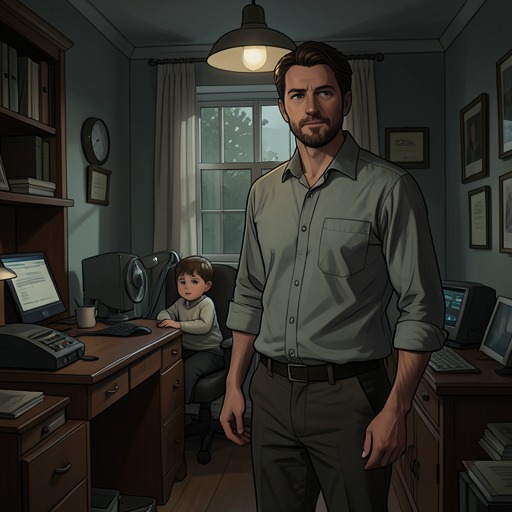
Monica is introduced at the home of Thobela Mpayipheli and Miriam Nzululwazi, where Miriam receives her while Mpayipheli is away. When he arrives, Monica gives her name and he greets her, but his immediate concern is locating Pakamile Nzululwazi. The exchange places her inside a household already organized around Mpayipheli’s care for Miriam and her son, while her urgent reason for coming remains distinct from that domestic routine.
An intelligence briefing supplies details of Monica’s life. She was born in London in 1974 to parents living in exile, went to school there, and completed computer-science studies in 1995. In 1980, an accident outside Manchester cost her both legs. She uses prosthetic limbs and refuses crutches or other aids. By the time the briefing describes her, she is a senior manager in the technology division of Sanlam. These details establish both her professional standing and the independence with which she presents herself; the intelligence service, however, also packages them as a profile, turning a life history into information for surveillance.
The Link Between Her Father and Mpayipheli
Monica’s involvement begins with her father’s decision to give her a contact name and number. Several weeks before the later crisis, Johnny came to her workplace—something he had never done before—with a piece of paper. He instructed her to contact Mpayipheli if anything happened to him. The name written there was Tiny. Monica later explains that her father knew Mpayipheli during The Struggle. Her account gives the delivery mission a personal foundation: it proceeds not from an established relationship between Monica and Mpayipheli, but from her confidence in her father’s judgment and the contingency he had arranged.
When Monica tells Mpayipheli about the call from Lusaka, she explains that the callers already possess some disks but want another one, which she retrieved from her father’s safe. She has been given seventy-two hours to deliver it in Lusaka. The caller specifies the foyer of the Republican Hotel as the meeting place. The distinction between the disks already held by the callers and the one they demand makes the missing disk the center of the immediate danger; Monica’s account is also what makes Mpayipheli understand that the deadline and the journey are real.
The intelligence service subsequently monitors the Kleintjes household and investigates Johnny’s contact with the American Embassy. In a briefing, officials identify Monica as his daughter and connect her to the developing case. Later, Williams speaks with her at her father’s house. He expresses sympathy for her decision to help her father and asks about Johnny’s relationship with Mpayipheli and the nature of the data. Monica’s position is consequently defined by two forms of trust: the private confidence her father placed in her, and the official questioning that seeks to establish what she knows and what the disk contains.
Surveillance and Competing Accounts
The hard disk is not treated by officials as an ordinary delivery. Janina Mentz tells colleagues that it contains highly sensitive information about a high-level mole known by the code name Inkululeko and argues that protecting the state must take precedence over sympathy. Monica is not the source of that assessment in the available scenes, but her part in moving the disk brings her into the machinery built around it. Intelligence officials see a necessary source of information and a potential security risk; the callers from Lusaka see her as the person through whom they can compel delivery.
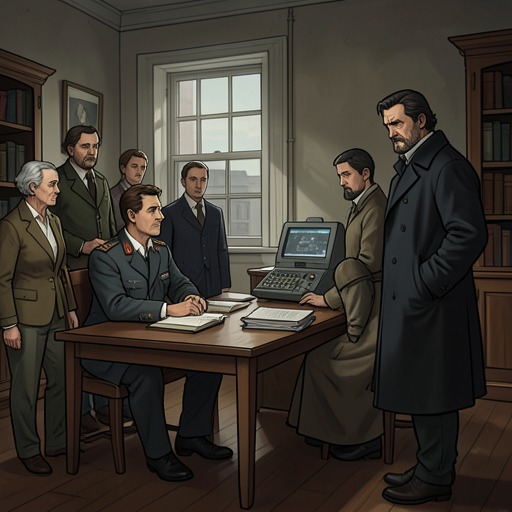
Mentz decides that Monica must be brought in before journalists reach her door. When Monica arrives, limping urgently, Mentz is speaking to Captain Tiger Mazibuko by telephone. She ends that call, reassures Monica that officials are already in Lusaka, and instructs her to give the callers the truth about the disk and her dealings with Mpayipheli, but not to disclose that she is being held at the intelligence office. Mentz also tells her to admit that officials have contacted and questioned her, and to say that she suspects her telephone was tapped. The instruction creates a narrow distinction between truthful disclosure and concealment: Monica is encouraged to speak openly about the delivery while the state hides her location.
That arrangement is strained by the officials’ broader public-relations problem. The Minister of Intelligence complains that constant radio coverage is making the fugitive appear heroic and making the authorities look repressive. Mentz proposes turning the facts against him, citing his former work for organized crime, use of his training for violence, and unexplained money. In this account, Monica is characterized as an innocent woman and a mother’s child whose trust Mpayipheli has exploited. That official framing sits uneasily beside the evidence that she acted on her father’s instruction and made the decision to help him. The contrast shows how her own agency can disappear when institutions recast her as either a victim in need of protection or leverage in a public argument.
The Lusaka Call and Monica’s Position
With Quinn coordinating the monitored conversation, Monica puts on a headset and answers the call from Lusaka. The caller insists that the original agreement still applies, says that forty-eight hours remain, and threatens Johnny if the disk fails to arrive, if agents appear in Lusaka, or if the data proves false. The caller also reveals knowledge that Johnny has been working with intelligence officials and has tried to provide false information. Monica’s father’s precarious position is thus made explicit, while the caller’s terms put her between the delivery plan and the intelligence service’s intervention.
Monica’s body jerks as she hears the threats, and she begins to cry. The connection then breaks; the Director looks at Janina Mentz with a strange expression. The scene ends without establishing whether Monica travels to Lusaka, whether the disk is delivered, or what happens to Johnny. Her immediate distress is clear, but the outcome remains unresolved in the evidence available here. The broken call leaves the central bargain suspended rather than settled.
Narrative Role
Monica connects the intimate history of Johnny and Mpayipheli to the larger contest over the disk. Her father’s note turns an old comradeship into a present-day obligation; her retrieval of the disk gives that obligation practical force; and the deadline draws the intelligence service into her private communications. Each side has a different account of what she represents, but her actions resist being reduced to those accounts. She is a daughter acting on her father’s trust, a professional with a life and identity beyond the operation, and a participant who must navigate information that powerful institutions want to direct.
The novel also places her in the gap between public narrative and private circumstance. Officials debate how to portray Mpayipheli, while the callers use Monica’s relationship with her father to press their demands. Yet the scenes that define her are concrete and personal: the paper Johnny brought to her workplace, the disk from his safe, the specified meeting in Lusaka, and the headset through which she hears the ultimatum. The unresolved ending preserves the cost of those choices without converting Monica into a mere instrument of either side.